Fish Sort Puzzle
- 4.8
- Rating
- 1.00M
- Installs
- Free
- Price
 Analysis by App-foxy
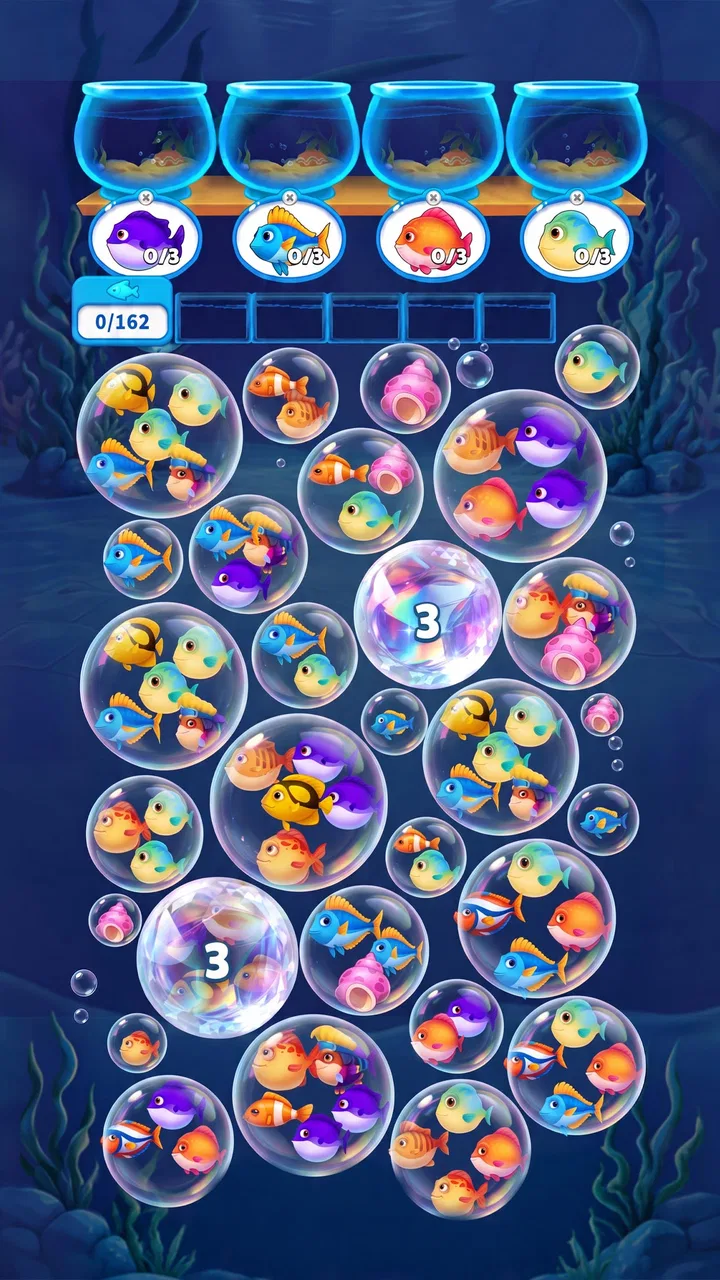
I approached Fish Sort Puzzle as a small, relaxing puzzle game rather than something meant to dominate my attention for hours. Its basic idea is easy to understand: sort colorful fish into the right places while gradually building a cheerful aquarium-like world. That simplicity is the main attraction. I can open it for a short break, solve a few boards, and put it away without needing to remember a complicated story or a long list of controls.
What makes it more appealing than a bare sorting exercise is the combination of matching puzzles and cartoon fish. The visual theme gives the routine a little personality, while the puzzle structure keeps the game focused. It is free to start, rated for Everyone, and developed by Shycheese. The result is a friendly choice for casual players, families, and anyone who enjoys tidy visual tasks more than fast reflex challenges.
How the everyday puzzle loop feels
My usual session starts with the simplest possible workflow: open the game, look at the available fish and spaces, and identify which move will create room for the next one. I try not to tap immediately. A few seconds spent reading the board often prevents a careless move, especially when several fish look similar or when a temporary space is needed to rearrange the rest.
You May Also Like

 Blood Strike: 2.5 Anniversary
Blood Strike’s Loadouts Turn Every Drop Into a Tactical Gamble
A close look at Blood Strike’s custom loadouts: how fast access to signature weapons reshapes its battle royale rhythm, rewards preparation, and narrows the gap between fights.

 Pandora - Music & Podcasts
Pandora’s Music Is Easy to Start, but Harder to Recover
Pandora’s strength is its low-effort path from a seed to a station. Its weak spot is how much confidence it asks you to place in connection, setup, and quiet recovery.

 8 Ball Pool
 Is Built on Rivalries, Rematches, and Routine
A close look at the rivalries, rematches, shared routines, and unanswered safety questions that turn a quick pool match into a persistent mobile community.

 Samsung Music
’s Quiet Strength Is Playing What You Already Own
Its reach comes less from spectacle than from dependable access to a personal library. That simplicity is both the app’s strongest retention engine and its ceiling.

 AccuWeather: Weather Radar
AccuWeather Review: A Quick, Clear Forecast for Everyday Decisions
For everyday plans, the best forecast is the one you can understand quickly. AccuWeather makes rain timing, radar, and local conditions easy to act on, with a few trade-offs.

 Hill Climb Racing
Why Hill Climb Racing Still Turns Crashes Into One More Run
A tiny car, a bumpy hill and one more upgrade: Hill Climb Racing keeps resurfacing because its simple chaos makes every near-miss feel personal.
More From Our News Desk
View All News


That pause is important because the game’s appeal comes from planning, not speed. I treat each board like a small desk that needs organizing. First I locate the colors or groups that are already close to completion. Then I consider which fish are blocking them. Finally, I move the obstructing pieces only when I have a clear destination in mind. This approach feels calmer and more reliable than making random taps and hoping the board fixes itself.
The cartoon presentation makes mistakes feel less severe than they might in a stark logic game. Even so, the game can expose a familiar weakness in sorting puzzles: an early move that looks harmless may reduce your options later. I found that the best habit is to preserve flexibility. If an empty or partially open space can accept several possibilities, I avoid filling it too quickly with a piece that has only one obvious home.
For a realistic everyday use, I can imagine playing during a short wait at a bus stop, between household tasks, or while winding down before bed. The boards are suited to brief attention windows because the central rule is immediately readable. I would not choose it when I want a deep narrative or a competitive match, but I would choose it when I want my hands and eyes occupied without a demanding commitment.
The game is also approachable for younger players because the theme is gentle and the content rating is Everyone. Adults may enjoy it for the same reason: there is no need to learn a fictional universe before the puzzle becomes enjoyable. The fish provide visual feedback, but the player’s real task remains organization and anticipation.
Small habits that make the first moves better
My most useful starting habit is to scan the whole board before touching anything. I look for nearly completed groups, isolated colors, and pieces that are acting as bottlenecks. A bottleneck is a fish that blocks access to several others; moving it may not immediately complete a group, but it can unlock the rest of the board. Recognizing that difference helps me avoid chasing the most obvious match too early.
I also separate “progress moves” from “storage moves.” A progress move sends a fish toward a clear matching group. A storage move temporarily places it somewhere safe so another path can open. Experienced play depends on knowing which kind of move I am making. If I mistake a storage move for progress, I may fill a useful space and leave myself with nowhere to work.
Another practical trick is to leave the most flexible location available for as long as possible. In a sorting puzzle, an open slot is not merely empty space; it is a tool. I use it to rotate pieces through the board, especially when two colors are interlocked. Spending that space on the first convenient move can make a later sequence unnecessarily awkward.
These habits are more valuable than tapping quickly. The game does not need a frantic rhythm, and rushing tends to create avoidable reversals. I get better results by making one deliberate move, checking how the board changed, and then updating my plan. That repeatable cycle is simple enough for a new player but still gives experienced users something to refine.
Settings and purchase choices worth considering
Before settling into longer sessions, I would check the available in-game settings for practical controls such as sound and notification behavior. I do not assume every player wants the same presentation. Someone playing quietly in a waiting room may prefer a muted experience, while another person may enjoy the cheerful audio at home. Checking these options early prevents the game from becoming irritating for reasons unrelated to the puzzles.
I would also look at how the game presents any help, restart, or confirmation actions before attempting a difficult board. In a sorting game, an accidental tap can matter, and knowing where the recovery controls are makes experimentation less stressful. I prefer to understand whether a move can be corrected or whether restarting is the cleaner option before I begin testing unusual arrangements.
The game is free, which makes trying it straightforward, but it includes optional in-app purchases ranging from $1.99 to $99.99 per item. That range is worth keeping in mind, particularly on a shared family device. I would review purchase authentication and make sure the person using the phone understands that optional items can cost more than a casual impulse suggests. The free entry point is convenient, but it does not mean every available purchase is equally small.
I do not think spending is necessary to decide whether the core sorting loop suits you. My recommendation is to play naturally first. If the puzzles already fit your routine, then you can decide whether an optional purchase solves a specific annoyance. If the basic loop feels repetitive, buying something will not change the fact that the central activity is still sorting fish and matching groups.
The technical requirements are also friendly for older devices: the game supports Android starting with version 6.0. That makes it a practical candidate for a spare phone or a family device that is not running the newest operating system. I would still judge the experience on the particular phone, since screen size and responsiveness affect how comfortable repeated tapping feels, but the minimum system requirement is not demanding.
Reading the board faster without rushing
Once the basic workflow becomes familiar, I start looking for patterns rather than individual fish. A completed or nearly completed color group is usually more important than the fish currently closest to my finger. I ask which group has the fewest obstacles, then which move exposes the next useful piece. This turns the board from a collection of cartoon images into a sequence of dependencies.
One repeatable pattern is to work backward from a desired destination. Instead of asking, “Where can this fish go now?” I ask, “What must be moved before that destination is available?” The backward question often reveals that a seemingly unrelated color is the real priority. It is particularly useful when the visible matching opportunity is blocked by another group.
I also try to avoid mixing too many unfinished groups at once. If I begin moving several colors around without completing any of them, the board becomes harder to read and my temporary spaces disappear. Concentrating on one promising route while keeping one escape option open gives me a clearer mental picture. This is not always the fastest-looking approach, but it reduces the number of decisions I need to reconsider.
A further improvement is to identify dead-end arrangements early. If a move places a fish where it cannot be used without moving several others, I treat it as a warning rather than an automatic mistake. Sometimes that move is necessary, but I make it only when I can explain how the board will be opened afterward. This makes my play more intentional and helps me learn from failed attempts instead of simply repeating them.
For players who prefer a relaxed routine, I suggest using the same short checklist on every board: scan, find the bottleneck, preserve flexible space, and confirm the next destination. Repeating that sequence creates a useful rhythm. It also makes the game easier to hand to another player, because the strategy can be explained in ordinary language without turning the experience into a lesson full of jargon.
Where the puzzle design may test your patience
The same simplicity that makes Fish Sort Puzzle accessible can limit its appeal for players who want constant novelty. The main interaction remains a familiar sorting task, so people who prefer word puzzles, match-three chains, physics challenges, or story-driven adventures may find the loop too narrow. I would skip it if I needed dramatic progression, competitive rankings, or a large variety of mechanics.
There is also a difference between relaxing and repetitive. At first, arranging the fish feels satisfying because every move visibly improves the board. After longer sessions, that satisfaction may soften if the visual theme changes less often than the underlying task. I get the best experience by treating it as a short-session game rather than trying to turn it into an all-day activity.
The free-to-play structure deserves a measured view as well. Optional purchases can be useful for players who want additional convenience, but they can also interrupt the clean, simple feeling that makes the game attractive in the first place. I prefer to keep purchases separate from my puzzle decisions. If I am stuck, I first replay the board mentally, identify the move that caused the problem, and try a different order before considering any paid assistance.
Another limitation is that sorting games reward patience more than imagination. There is satisfaction in finding the correct sequence, but the game is not designed for open-ended creation despite the aquarium theme. The fishbowl world gives the puzzles a pleasant setting; it does not turn them into a full aquarium management simulation. That distinction matters if you are looking for decoration, breeding, collecting, or a broader virtual-pet experience.
Compared with a traditional match-three game, this feels less reactive and more deliberate. There is no need to chase a chain under pressure; I can study the arrangement and plan. Compared with a classic block-sorting puzzle, the fish theme makes the presentation warmer and more accessible, although the underlying satisfaction still comes from managing space. A dedicated logic game may offer harder mental challenges, while this one is better at providing an approachable, visually friendly break.
Who will enjoy it most
I would recommend it to players who like tidy visual systems, gentle cartoon presentation, and puzzles that can be understood quickly. It is a good fit for someone who wants a low-pressure activity on an Android phone, especially if they enjoy improving through repeatable habits rather than learning complicated controls. Families may also appreciate the Everyone rating and the absence of a need to understand a long story before playing.
It is less suitable for someone who wants a substantial campaign, a strong social component, or a game that constantly changes its rules. It may also disappoint players who expect the fishbowl theme to provide a deep collection or customization system. The best reason to install it is the sorting itself, with the fish serving as a friendly frame around that activity.
The game’s scale is reflected in its audience: it has passed one million installs and holds a 4.8 average from around forty-two thousand ratings. Those figures suggest that the straightforward concept has found a broad casual audience, but they should not be read as proof that every puzzle fan will enjoy it. Popularity cannot replace personal fit, especially when the game is intentionally focused.
My verdict after building a repeatable routine
Fish Sort Puzzle works because it does not overcomplicate its central promise. I can open it, understand the board, and begin making useful decisions almost immediately. The strongest experience comes from slowing down enough to read the arrangement, protecting flexible space, and treating temporary moves as part of a plan rather than as wasted motion.
Shycheese has positioned it as a friendly puzzle game rather than a demanding strategy title. The current version is 1.5111, and the combination of free access, a gentle presentation, and support for Android 6.0 or later makes it easy to try on a wide range of devices. I would keep expectations realistic: this is a focused sorting game, not a complete aquarium simulator or a replacement for a deep logic collection.
My final recommendation is simple. Install it if you want calm, readable puzzles that fit into small gaps in the day, and use the scan-and-preserve-space routine to get more from each board. Skip it if you need constant mechanical variety or a rich long-term world. For the right player, the best feature is the balance between immediate accessibility and small strategic decisions: the fish make the game inviting, while careful sequencing gives the experience enough depth to reward practice.
FAQs for Fish Sort Puzzle
01What is Fish Sort Puzzle and how do you play it?
Fish Sort Puzzle is a casual sorting game in which you organize colorful fish into matching groups, tanks, or containers. The main objective is to move fish carefully until each container holds fish of the same type or color. It starts with simple levels, then introduces more containers, limited spaces, and more complicated arrangements that require planning before every move.
02Is Fish Sort Puzzle free to download and play?
Fish Sort Puzzle can generally be downloaded and played for free on supported Android or iOS devices. However, the game may include optional advertisements, in-app purchases, or paid items such as hints, extra moves, coins, or ad removal. You can usually progress without spending money, although purchases may make difficult levels more convenient.
03Does Fish Sort Puzzle require an internet connection?
Many of the basic sorting levels in Fish Sort Puzzle can be played offline, which makes the game suitable for short sessions while traveling or when mobile data is unavailable. Nevertheless, an internet connection may be needed for advertisements, cloud features, updates, special events, or restoring purchases. Offline availability can also vary by device and version.
04Is Fish Sort Puzzle suitable for children and beginners?
Fish Sort Puzzle is easy for beginners to understand because its controls usually rely on tapping a fish container and selecting a destination. The colorful aquarium theme and gradual difficulty can also appeal to children. Parents should still review advertising and purchase settings, since the app may contain optional purchases or ads depending on the platform and installed version.
05What can I do if I get stuck on a level?
If a level becomes difficult, first examine the available empty containers and plan several moves ahead instead of moving fish immediately. Many versions provide hints, undo options, level resets, or extra spaces that can help you recover. If those tools are limited, restarting the puzzle is often the best solution, and some games may offer optional rewards or purchases for assistance.
Pros
- Simple drag-and-drop controls are easy for players of all ages.
- Short levels make it convenient for quick breaks or casual play.
- Colorful fish and aquarium visuals give the game a pleasant look.
- Gradual challenges help introduce sorting mechanics without feeling overwhelming.
- Offline play is useful when you have no internet connection.
Cons
- Later puzzles can become repetitive after extended play sessions.
- Some levels may rely more on trial and error than strategic planning.
- Ads can interrupt gameplay
- depending on the version and device.
- Limited variety in the core mechanic may reduce long-term appeal.
- Progress or extra features may be restricted by optional in-app purchases.

Fish Sort Puzzle
Gallery